
Platform * Cecilie Penney x Lawrence Ebelle
Text by Lawrence Ebelle, architect and curator
In recent years, visual artist and composer Cecilie Penney has turned her attention to the healthcare system and its structure. She explores the emotional state that emerges when the body becomes a patient within a system whose language is often dissonant with the body’s needs. A system in which care is filtered through procedures, waiting times, and bureaucratic rhythms that obscure presence and attentiveness.
With her solo exhibition "Rest and Routine – Duet for Sanatorium and Modern Hospital", Penney expands this investigation to the scale of architecture, probing what might be called the architecture of empathy: the ways in which built environments shape, enable, or withhold forms of care. The exhibition stages an encounter between two historical architectural models of care: the early twentieth-century sanatorium and the contemporary super hospital. While the sanatorium prioritizes the stay itself – an understanding of healing linked to light, nature and access to fresh air, the super hospital is designed to heal, streamline, and move the patient onward. These two architectures appear as voices in a duet in which tempo, rhythm, and priorities are constantly shifting.
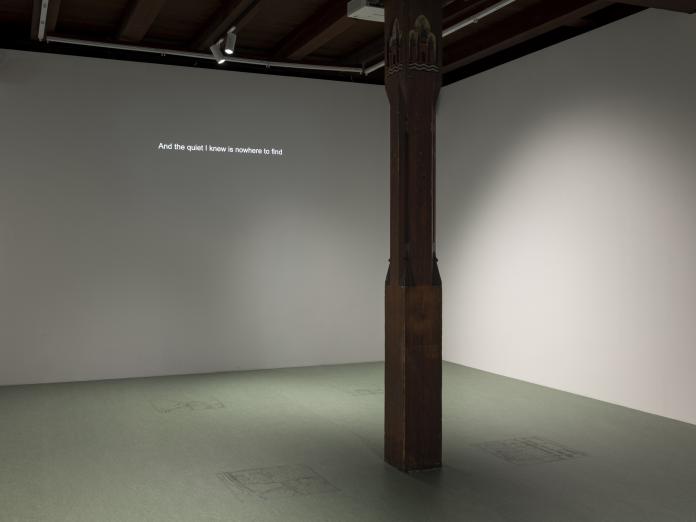
Penney takes over Nikolaj Kunsthal’s former church space, transforming it into a lyrical stage. Here, it temporarily changes key: from institution to dwelling, from passage to immersion. An opera vocal lends the sanatorium body and breath, while a more mechanical, rhythmic voice represents the constant pulse of the super hospital. Together with machine sounds and processed field recordings, they form an electronic composition that envelops the audience and organizes the space through repetition, pauses, and ruptures, like a system that choreographs bodies.
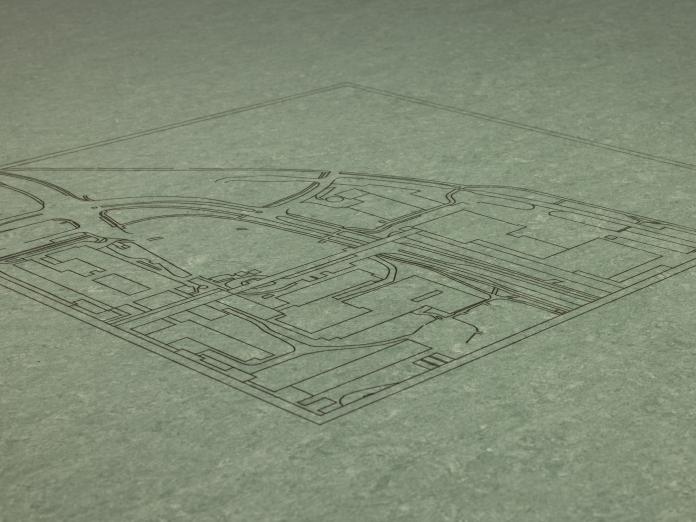
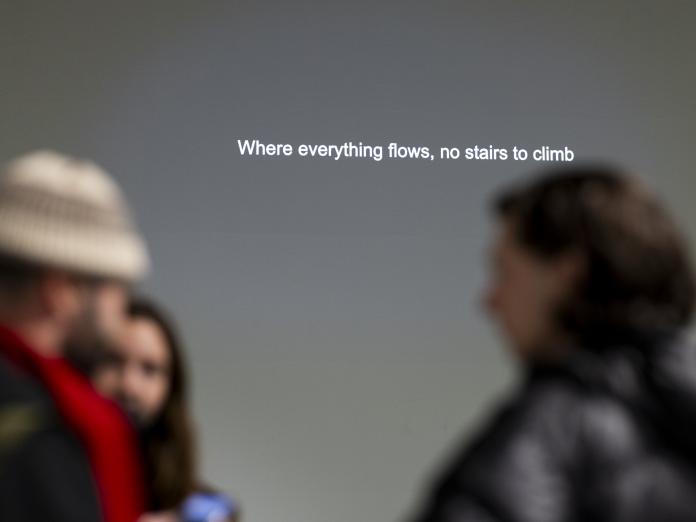
The exhibition’s dramaturgy draws on the opera tradition’s use of supertitles as carriers of the story, while the projected song lyrics function as pieces in a fragmented narrative. They structure the work’s dialogue and open a space between past and present. Architecture is also materialized physically: the floor is covered with linoleum engraved with patterns based on a floor plan from a modern hospital. An otherwise invisible structure becomes tangible underfoot and perceptible to the body.
"Rest and Routine – Duet for Sanatorium and Modern Hospital" continues the research and critique of systems that produce care, but also distance, initiated by Penney in earlier works such as "I have gotten used to speaking in fragments because that is how I receive information" (2024) and "I don’t understand the words you use" (2024). The exhibition invites the audience to inhabit the tension between rest and routine. Here, it becomes clear that care is not merely given, but composed, structured, and distributed. The exhibition suggests that care is not only a relational act, but also a spatial and organizational concern, in which architecture, as a silent ally – or sometimes an obstacle – always plays a role in determining who is allowed to rest.
Access Press Kit (in Danish).
The exhibition "Rest and Routine – Duet for Sanatorium and Modern Hospital" is supported by Rådet for Visuel Kunst, Københavns Kommune, Statens Kunstfond, Fake Foundation, Dansk Artist Forbund, and Koda Kultur. The project space Platform has been realized with support from Det Obelske Familiefond.
About Cecilie Penney
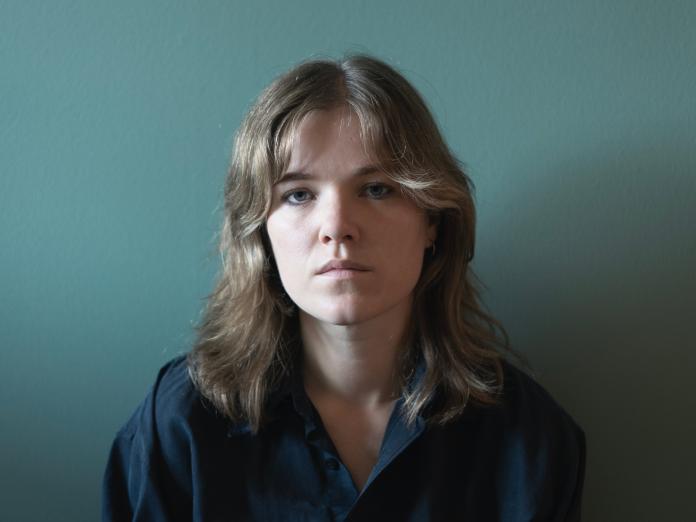
Cecilie Penney (b. 1990, Denmark) is a visual artist and electronic composer who works across sound, installation, video, and text. Her practice explores how infrastructure and cultural norms shape human behaviour, as well as how emotions and empathy unfold within structural, linguistic, and technological systems.
In recent years, she has focused particularly on the Scandinavian healthcare system and how patients navigate an institution that can be difficult to access and understand. Taking a conceptual approach, Penney explores how patients are often expected to fit into rigid frameworks that do not take their individual needs into account. By creating imagined or alternative worlds, she explores new possibilities for healing and transformation within bureaucratic systems and invites reflection on how systemic change can grow out of emotional insight and collective rethinking.
Penney holds an MFA from the Royal Danish Academy of Fine Arts' Schools of Visual Arts in Copenhagen and a BFA in Art Photography from HDK-Valand in Gothenburg.
About Lawrence Ebelle
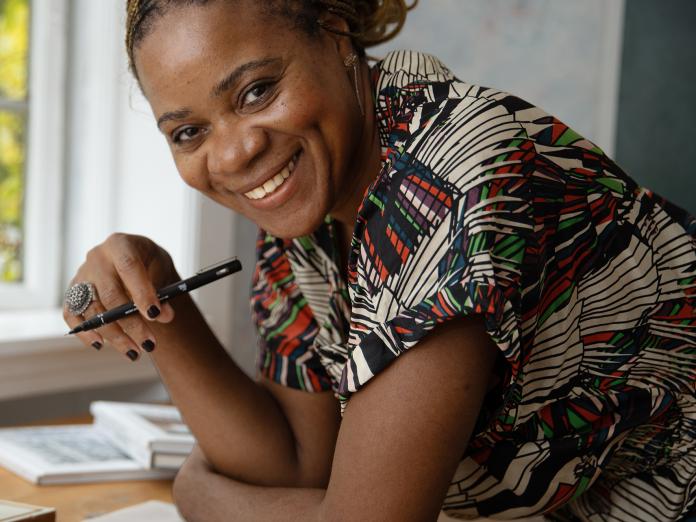
Lawrence Ebelle (b. 1974, FR/US) is an architect and curator with an M.Arch. from the University of Illinois Chicago and ÉNSAV Paris. Her practice moves between architecture, scenography, and art and is characterised by a particular attention to atmosphere, sensuality, and spatial experience. Ebelle often works site-specifically, using existing architecture as a starting point for investigations into how space affects the body, behavior, and perception.
In her curatorial work, she brings together spatial, social, and political perspectives and explores how architecture both reflects and shapes complex social structures. Through the Curated Works platform, she explores interdisciplinary formats where architecture, sound, scent, and visual elements are interwoven in immersive installations that invite the audience to reflect and be present.
Ebelle is also the spokesperson for UKK – Organisation for Artists, Curators and Art Communicators – which works to promote greater diversity, new practices, and mission-oriented development in the visual arts field. In the exhibition Rest and Routine – Duet for Sanatorium and Modern Hospital, Ebelle brings her architectural and curatorial background into dialogue with Cecilie Penney's practice in an exploration of the spaces and logics of the healthcare system.